Le bruit d’à côté · Chapter 2 · 3/27
Chapter 2 — The father, the cat, and me
I stood perfectly still.
One hand on the door handle.
My shoulder aching.
My heart mildly occupied with trying to escape my body through my throat.
Someone had just knocked on my door.
At three in the morning.
Or almost four.
Either way, at an hour when human interaction should have been legally prohibited, except in cases of fire, medical emergency, or food delivery you would regret the next day.
A second knock came.
Quieter.
Sharper.
The kind of knock made by someone who knew exactly why he was there.
I looked down at what I was wearing.
Wrinkled T-shirt.
Sweatpants.
Sweatshirt badly pulled on, one sleeve half inside out.
Hair probably in a condition suitable for forensic analysis.
Fine.
I was about to open the door to my neighbors for the first time in my life looking like a man who had just lost a fight with his own furniture.
The rabbit lifted his head from his corner.
This time, he was actually watching me.
As though he had finally realized the situation might become interesting.
“Don’t judge me.”
His nose twitched.
Judgment confirmed.
I unlocked the door.
Opened it.
And found myself facing a man.
Very upright.
Very dignified.
Very awake, which immediately struck me as suspicious.
He had a way of standing in an apartment hallway as though the hallway temporarily belonged to him. Straight shoulders. Steady chin. Composed expression. Not aggressive.
Worse.
Bureaucratic.
In his arms was Eugène.
My cat.
Resting against him with the obscene serenity of an animal who had just triggered a diplomatic crisis and intended to remain neutral.
I looked at Eugène.
Eugène looked at me.
Slow blink.
No remorse.
Obviously.
“Good evening,” the man said.
His voice sounded exactly the way it did through the wall.
Deep.
Measured.
With the natural authority of a man capable of saying “good evening” as though he were presenting a case before a committee.
I answered too quickly.
“Good evening.”
Then I realized that wasn’t enough.
“Sorry.”
Too soon.
He hadn’t even said anything yet.
Excellent start.
The man glanced down at Eugène, then looked back at me.
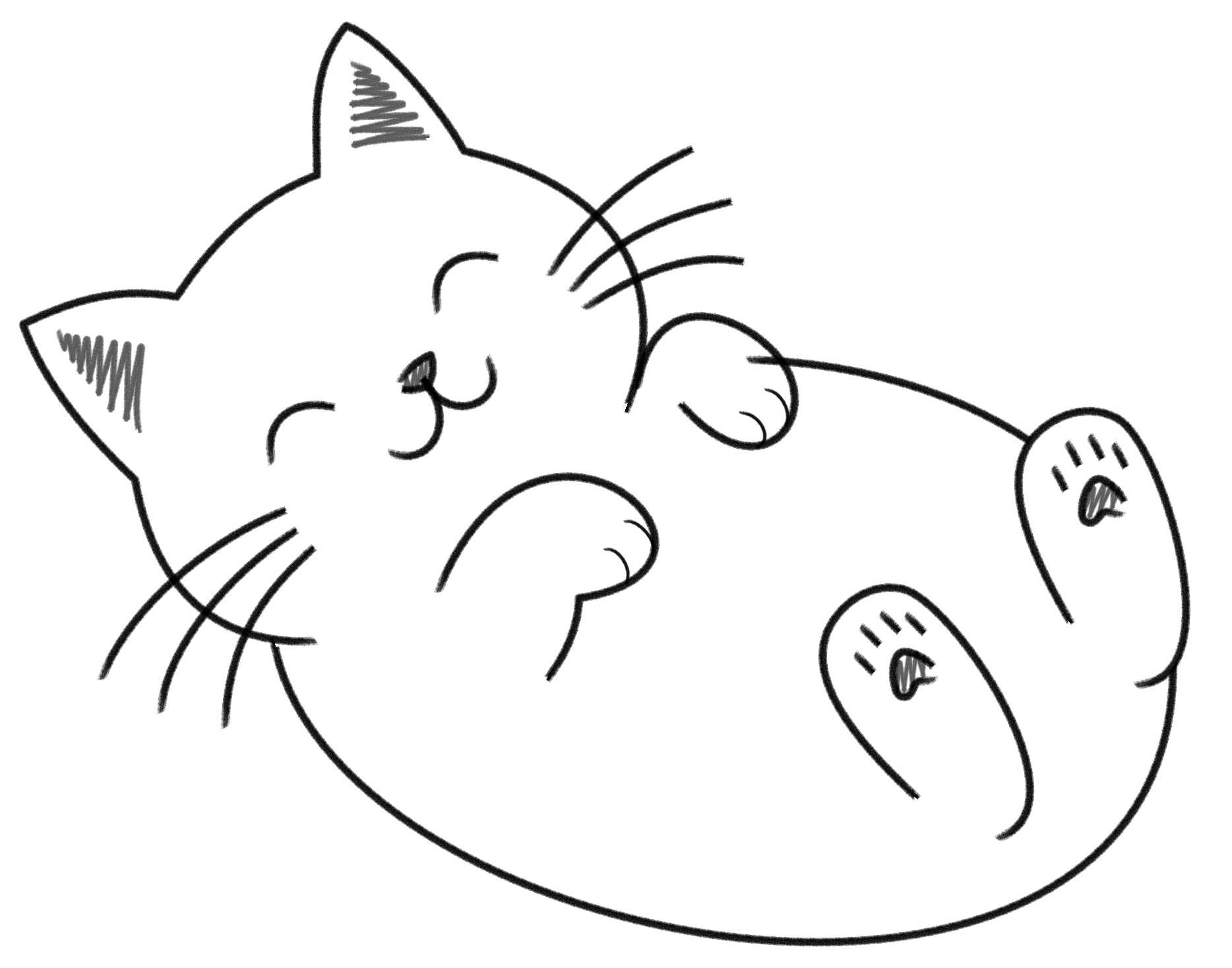
“This cat belongs to you, I assume.”
I looked at Eugène.
Then the man.
Then Eugène again.
There was probably a more subtle answer than the one I was about to give.
“Yes.”
Fine.
Concise.
Perfect.
The man nodded slowly.
“He entered our apartment through the balcony.”
“Yes. Well, I think so. I mean... probably. I only just noticed.”
“He was in the living room.”
I closed my eyes for half a second.
The living room.
Of course.
Not the balcony.
Not just the ledge.
The living room.
Eugène hadn’t crossed a boundary.
He had immigrated.
“I’m really sorry.”
“My daughter is allergic to cats.”
“Yes, I heard.”
Silence.
Mistake.
I had just admitted to listening to my neighbors.
At three in the morning.
In a hallway.
In front of a protective father holding my cat like a piece of evidence.
Perfect.
I immediately tried again.
“Well, not heard heard. The walls are thin. And I was on the balcony because I was looking for him. Eugène. The cat. Not... your daughter.”
The man stared at me.
For a long time.
Too long.
I felt my soul attempting to slip quietly toward the emergency stairs.
“I understand,” he said at last.
He understood absolutely nothing.
Or he understood far too much.
Movement appeared behind him, in the doorway of the neighboring apartment.
A silhouette.
Then a voice.
“Dad, you’re scaring him!”
I looked up.
And saw her.
For the first time as something other than fragments of sound.
Liora.
I knew it before anyone said her name, which was probably ridiculous. I already knew her voice, her rhythm, the way she occupied the air. Her face had simply arrived later than everything else.
She stood behind her father, leaning slightly to see over his shoulder.
Or rather, to work her way around the physical authority of him.
Hair tied up any old way, eyes slightly red, nose faintly irritated, long sleeves pulled over her wrists. She looked tired, allergic, and absolutely delighted.
A concerning combination.
She didn’t look like someone who had been woken up by a problem.
She looked like someone who had just discovered a secret passage inside a wall.
Her gaze moved from me to Eugène, then back to me with an immediate, direct curiosity that was almost unsettling.
Not rude.
Just completely straightforward.
As though she had opened a book halfway through and decided to understand the plot immediately.
“That’s Eugène?”
I blinked.
“Yes.”
“His name is actually Eugène?”
“Yes.”
“That’s incredible.”
I couldn’t tell whether she meant the name, the cat, or the situation in general.
Her father turned his head slightly toward her.
“Liora, step back.”
“I am back.”
“You’re twelve inches away from the cat.”
“That’s still better than zero.”
“You’ve been sneezing for ten minutes.”
“Eight.”
“Liora.”
She sighed, though she barely moved.
Her eyes returned to Eugène, who had placed one paw on her father’s forearm with the ease of a landlord requesting to be carried.
“He’s gorgeous,” she said.
I looked at my cat.
Eugène had indeed put on his best face.
The one from adoption photos.
The one that said: I am a gentle, composed creature made entirely of affection and fur.
A visual scam.
“He’s mostly very disobedient,” I said.
Liora smiled.
“No. He’s adventurous.”
“He entered your apartment without permission.”
“Like heroes at the beginning of stories.”
Her father inhaled slowly.
I recognized that breath.
I had heard it before, even through the wall.
The breath of a man discovering that logic would not be enough to save his evening.
“This is not a story, Liora. It’s an intrusion.”
“A small intrusion.”
“A feline one.”
“So less serious.”
“Quite the opposite.”
I remained in the doorway, unable to decide whether I should intervene, retrieve my cat, apologize, disappear, or move out before sunrise.
Every option seemed valid.
The man turned his attention back to me.
“You’ll need to make sure this doesn’t happen again.”
“Yes. Of course. I’ll... secure the balcony.”
“Does your balcony connect to ours?”
“Not really. I mean, there’s a divider. But it’s low. It’s fine for a human. For a determined cat...”
I looked at Eugène.
He blinked.
“...apparently, it isn’t.”
Liora gave a small laugh.
Brief.
Quick.
A laugh that seemed to travel through the hallway faster than the rest of her.
I didn’t smile.
Not outwardly.
At least, I hoped not.
Because there was absolutely nothing funny about the situation.
Except perhaps my cat being carried by a father in the middle of a domestic security operation while his allergic daughter watched him as though he had performed a miracle.
Okay.
Slightly funny.
“Do you live alone?” her father asked.
The question landed with unsettling precision.
“Yes.”
“For long?”
“Two years. Almost.”
“And you have several animals?”
I froze.
How did he know?
Then I turned my head slightly toward my apartment.
The rabbit had moved forward a few inches.
He was visible behind me.
Sitting in the middle of the studio, perfectly still in the bluish light of the screen I had left on.
Traitor number two.
Liora spotted him immediately.
Her eyes widened.
“Oh my God.”
I mentally sealed every exit.
Too late.
“Is that a rabbit?!”
“Yes.”
“You have a rabbit?!”
The sudden jump into casual familiarity hit me with wildly disproportionate force.
I had known her for forty seconds.
She had already demolished an entire layer of social formality.
“Yes.”
“What’s his name?”
I glanced at her father, who seemed to feel that this question was not a priority within the current incident.
I agreed with his assessment.
Unfortunately, Liora was looking at me as though the answer mattered immensely.
“Demitrius.”
Silence.
Even Eugène seemed to recognize that something had just happened.
Liora stared at me.
Then burst out laughing.
Not loudly.
Not unkindly.
With such spontaneity that the hallway seemed to wake up around her.
“Sorry,” she said immediately, lifting a hand to her nose. “Sorry. It’s just... Eugène and Demitrius?”
“Yes.”
“Your pets have the names of old men who play chess in the park.”
I kept a straight face.
“They have complex inner lives.”
Her smile grew wider.
Her father didn’t smile.
Or barely.
Or perhaps he had an extremely discreet way of acknowledging humor.
“Liora, go take your antihistamine.”
“I already took one.”
“Then move away.”
“But I’m fine.”
She sneezed.
Once.
Then twice.
Then three times.
Her father looked at her.
She raised one finger.
“That proves nothing.”
“That proves exactly what I said.”
I took a step forward despite myself.
“Would you like me to take him?”
The man looked down at Eugène.
Eugène didn’t move.
He was comfortably settled in the man’s arms.
Comfortably.
In the arms of the man who had just condemned his behavior.
That cat had no moral consistency.
“Yes,” he said.
He held Eugène out to me.
I stepped forward to take him.
There was something strangely solemn about the exchange.
Like handing over a child after family mediation.
Or returning a stolen work of art.
Eugène moved from his arms to mine with a heavy, deliberately cumbersome slowness. He stretched one paw against my sweatshirt, rested his head near my shoulder, then began to purr.
Loudly.
I looked down at him.
“Now you’re purring?”
He closed his eyes.
Of course.
Liora pressed both hands to her chest.
“He purrs like an engine.”
“Yes. Usually when he’s gotten what he wanted.”
“He wanted to come to our place?”
“Apparently.”
“See, Dad.”
“I don’t see anything.”
“He chose us.”
“He broke into our apartment.”
“That’s one way of choosing.”
Her father slowly turned toward her.
“Liora.”
She fell silent.
Not because she seemed intimidated.
More because she knew the precise limit before the full parental speech began.
I recognized that too.
Not from any particularly memorable personal experience.
More from survival instinct.
A father like him probably didn’t raise his voice often. He didn’t need to. He could produce one complete, calm, carefully structured sentence, and everyone understood that the fragile objects should probably be put back where they belonged.
He looked at me again.
“You understand that I cannot allow a cat to enter our apartment.”
“Yes. Completely. I’m sorry.”
“My daughter has always had allergies.”
“Dad...”
“It isn’t harmless.”
“I know.”
“You’re saying that like I’m made of sugar.”
“I’m saying it because you start sneezing whenever a cat exists within thirty feet of you.”
“Not this one.”
Another silence.
I looked down at Eugène.
So did Liora.
So did her father.
Eugène continued purring.
Thunderously.
Contentedly.
Completely useless to the scientific debate.
“Well, not much,” Liora added.
She sniffed discreetly.
Not discreetly enough.
Her father raised his eyebrows.
She rolled her eyes.
“Fine, a little. Much less than usual, though.”
“Liora.”
“What? It’s true. Usually I die.”
I stiffened.
“You... die?”
“No,” her father said.
“Metaphorically,” Liora said.
“There is nothing metaphorical about an asthma attack.”
“I didn’t have an asthma attack.”
“Because I removed the cat.”
“You picked him up, Dad. Don’t act like you conducted a public health operation.”
Her father straightened slightly.
“I isolated him.”
“You petted him.”
“I was checking whether he was calm.”
“With your hand on his head?”
“It’s a method.”
I looked at the man.
Then Eugène.
Then Liora.
A strange exhaustion passed through me.
Not a bad one.
Just the exhaustion of someone who had worked until three in the morning, searched for his cat while imagining his death, then discovered that the apartment next door was inhabited by a girl capable of negotiating an allergy like an international treaty.
I tightened my hold on Eugène.
“I’ll be careful,” I said. “Really. I’ll block access to the balcony. He’s never done this before.”
“Cats are repeat offenders,” her father said.
Definitive tone.
I wanted to point out that freelancers were too, but it wasn’t clear or useful.
“Yes. Probably.”
“You’ll need a serious solution.”
“I’ll find one.”
“A real solution.”
“Yes.”
“Not a chair in front of the balcony door.”
I froze.
Because that had been precisely my first idea.
One chair.
Maybe two.
With a cardboard box.
A temporary solution, though morally reassuring.
Liora looked at me.
Her smile appeared immediately.
She knew.
Obviously.
“You were going to use a chair.”
“No.”
Too fast.
“Yes, you were.”
“Not only a chair.”
“Two chairs?”
I looked away.
She laughed again.
“Dad, he has exactly the same approach to repairs as you.”
“My approach to repairs is perfectly functional.”
“You fixed the cupboard door with a cookbook.”
“Temporarily.”
“That was in November.”
“It’s still holding.”
I didn’t want to enjoy this conversation.
I also didn’t want to notice the way Liora spoke, fast and direct, with her entire face. Not only her mouth. Her eyes, hands, shoulders. She seemed incapable of keeping an emotion in one place.
I had spent months hearing her through a wall.
In person, it was worse.
Not louder.
More present.
She made it feel as though the hallway had acquired an additional light source. Badly adjusted, probably energy-intensive, impossible to ignore.
I looked down at Eugène.
“You created this.”
He purred more loudly.
Liora leaned forward slightly.
Her father immediately raised one hand in front of her without actually touching her.
A simple barrier.
“No.”
“I only wanted to say goodbye.”
“You can say it from there.”
She sighed, then looked at Eugène with absurd solemnity.
“Goodbye, Eugène...”
Eugène didn’t respond.
Not even an ear twitch.
Liora seemed fascinated.
“He’s very rude.”
“Yes,” I said.
“I like him.”
“Yes, that’s concerning too.”
She looked at me.
This time, her smile was less radiant.
More precise.
As though she had just noticed that I had spoken without completely panicking.
Which wasn’t true.
I was still panicking.
My panic had simply found a chair somewhere inside me and sat down.
“What’s your name?” she asked.
The question came naturally.
Directly.
Like everything else.
“Aurèl.”
“Aurèl,” she repeated.
She pronounced my name as though she were testing its sound.
I had no idea what to do with that information.
No internal procedure available.
“I’m Liora.”
“I know.”
Silence.
Mistake.
Again.
She tilted her head.
Her father looked at me too.
Great.
I really needed to stop voluntarily admitting unsettling things.
“Your father called you that,” I explained. “Earlier. When... the cat.”
“Oh.”
She smiled.
“Right. Makes sense.”
Her father seemed less convinced by the innocent nature of my knowledge.
I continued, because apparently my mouth had decided to finish the descent on its own.
“And the walls are thin.”
Another silence.
Why?
Why had I added that?
Liora stared at me for a second.
Then her face lit up.
“You can hear us?”
“No.”
“You literally just said the walls were thin.”
“I hear sounds. Not conversations. Well, not always. I mean, rarely. I mean...”
I stopped.
Too late.
There was no coming back from “not always.”
Her father crossed his arms.
Slowly.
Very slowly.
I suddenly felt like a teenager again, except I hadn’t done anything remotely teenage in years, other than eating cereal for dinner whenever a bill arrived at the wrong time.
“The walls are really thin,” Liora said, turning to her father. “I told you!”
“That is not the issue.”
“It is a little. If he can hear us, we’re too loud.”
“We are not too loud.”
She looked at me.
“Are we too loud?”
Trap question.
Absolute.
Lethal.
I looked at her father.
Her father looked at me.
I looked at Eugène.
Eugène had closed his eyes.
Coward.
“It’s an apartment building,” I said carefully. “People live in it.”
Liora narrowed her eyes.
“Diplomatic answer.”
“Survival answer.”
She laughed.
Again.
I couldn’t stop the corner of my mouth from moving.
Barely.
A muscular accident.
Probably.
Her father noticed.
I saw it in his expression.
He didn’t look hostile. More like he was adding another piece of information to a mental file that was already open.
Aurèl.
Neighbor.
Young.
Lives alone.
Two animals with suspicious names.
Runaway cat.
Dry sense of humor.
Potential noise liability.
Monitor.
I could almost hear the stamp.
“Well,” he said at last. “We are not continuing this conversation in the hallway at this hour.”
Relief.
“Yes. Of course.”
“Make sure your cat doesn’t come back.”
“Yes.”
Liora opened her mouth.
Her father raised one finger without even looking at her.
“No.”
“I didn’t say anything.”
“You were about to.”
“You don’t know that.”
“I’m your father.”
“That isn’t scientific proof.”
He ignored her with impressive discipline.
Then he held out something I hadn’t noticed in his left hand.
A sock.
Gray.
Chewed.
I looked at it.
I looked at Eugène.
I looked at the sock again.
“He had that?”
“In the kitchen,” her father said.
“It isn’t mine.”
“It’s mine,” Liora said.
She held out her hand.
Her father gave her a look.
“It’s covered in fur.”
“It was already a sports sock, Dad. It’s been through worse.”
I didn’t know where to look.
At the sock?
At Liora?
At Eugène?
At the floor?
The floor seemed reasonable.
I chose the floor.
“He steals things sometimes,” I said.
“So he’s a repeat offender,” her father said.
“I prefer to say he collects.”
“He collects my things?” Liora asked.
“Apparently.”
“That’s cute.”
“No,” her father and I said at the same time.
We looked at each other.
A brief alliance.
Unexpected.
Unpleasant in its implications.
Liora looked between us, then smiled as though she had just witnessed a promising scene.
I didn’t like that smile.
It seemed to contain a future.
I didn’t need a future at this hour.
I needed water, sleep, and a cat-proof barrier compliant with European safety standards.
“Well,” she said, retrieving her sock despite her father’s expression. “Eugène, you officially have permission to keep it if you come back.”
“Liora.”
“What?”
“He is not coming back.”
She turned toward me.
“He can come back whenever he wants.”
Her father answered immediately.
“No.”
Perfect answer.
Instantaneous.
Final.
I lowered my eyes to hide a smile.
Partial failure.
Liora saw it.
Of course.
She seemed to notice a great many things for someone who claimed not to think much before acting.
“You’re smiling,” she said.
“No.”
“Yes.”
“It’s exhaustion.”
“Exhaustion makes you smile?”
“Rarely. But this situation is medically strange.”
She burst into a slightly louder laugh, then immediately coughed.
Her father placed a hand against her back.
A simple gesture.
Familiar.
She looked up.
“I’m fine.”
He didn’t answer.
He only looked at her.
And for a second, something changed.
Not much.
Just enough for me to see that his seriousness wasn’t only about control. It was concern. Real. Precise. Maybe tired too.
Liora looked away first.
“I’m going to get some water.”
“Good idea.”
She finally stepped back into the apartment, though not before giving Eugène one last look.
Then me.
“Good night, Aurèl.”
My name again.
In her voice.
Through the wall, she had always been a presence. A sound. An energy without a shape.
Now she had a face.
Eyes reddened because of my cat.
A stolen sock.
And the unsettling ability to say my name as though we weren’t two strangers standing in a hallway at an indefensible hour.
“Good night,” I answered.
Too quietly.
She heard me anyway.
Then she disappeared into the apartment.
Not completely.
Her movement remained.
The sound of quick footsteps.
A drawer.
A cough.
Then her voice from farther away.
“Mom, are you asleep?”
Another voice replied with something I couldn’t make out.
A mother.
Of course.
The apartment next door kept gaining dimensions.
Her father stayed in front of me for another second.
I tightened my arms around Eugène.
“Sorry again.”
He nodded.
“I believe you.”
Surprising.
“Thank you.”
“But I’m warning you. If it happens again, we’ll need to discuss it more seriously.”
“Yes.”
“Not at three in the morning.”
“No.”
“At a reasonable hour.”
“Of course.”
“And without a cat in my living room.”
“Ideally.”
He looked at me.
Then, this time, I thought I saw the shadow of a smile.
Very faint.
“Good night, Aurèl.”
He knew my name now too.
I should have expected that.
I had literally answered his daughter two minutes earlier.
But hearing it in his voice had a different effect.
Like a summons.
“Good night, sir.”
I didn’t know his name.
“Sir” seemed safe enough.
He inclined his head slightly, then returned to his apartment.
The door closed.
Not violently.
Normally.
Which, in that family, almost qualified as an event.
I remained in the hallway with Eugène in my arms.
One second.
Two.
Three.
Then I went back inside.
I carefully closed the door behind me.
The studio welcomed me immediately.
The bluish light of the screen.
The cluttered desk.
The abandoned mug.
The guitar against the wall.
The rabbit in the middle of the rug, still frozen in a position of intense observation.
Everything was in its place.
Well.
Almost.
Because something had changed.
I set Eugène on the floor.
He stretched at length, as though returning from an exhausting stay at a very pleasant second home.
Then he walked to his cushion and settled down.
Without hurry.
Without guilt.
Without understanding that he had just altered the entire social balance of my life.
I looked at him.
“You’re banned from the balcony.”
He closed his eyes.
“Permanently.”
No reaction.
“I’m putting a chair in front of it.”
Silence.
“Two chairs.”
The rabbit moved one ear.
I turned toward him.
“Don’t start.”
I ran a hand over my face.
The exhaustion hit me all at once.
Heavily.
My brain, however, refused to sleep.
It replayed the scene.
The father in the hallway.
Eugène in his arms.
Liora behind him.
Her red eyes.
Her laugh.
The way she said “adventurous” instead of “disobedient.”
The way she spoke to my cat as though he had entered her life with a particular mission.
Ridiculous.
She was ridiculous.
The situation was ridiculous.
So was I, probably.
I went back to the balcony door and checked that it was properly closed.
Then I placed a chair in front of it.
Then stood there, looking at the arrangement.
It was objectively ugly.
Unreliable.
Entirely incompatible with the phrase “serious solution.”
I sighed.
On the other side of the wall, I heard more sounds.
Quieter now.
Footsteps.
A low voice.
Then Liora.
Slightly muffled.
“His name is Eugène, Mom.”
Silence.
Then she added from farther away:
“And he has a rabbit named Demitrius.”
I closed my eyes.
Fine.
My anonymity in the building was dead.
Officially.
I returned to the couch and sat down without turning on any more lights.
The studio had regained its quiet, but it wasn’t quite the same anymore.
There was now, inside the wall to my right, a person I had seen.
Not only heard.
A girl allergic to cats who defended feline intrusions.
A girl who laughed too easily.
A girl who took up too much space in a doorway.
Dangerous.
Not in the dramatic sense.
Not in the romantic sense either.
No.
Dangerous in the very practical sense that certain people could walk into an evening that was already badly arranged and suddenly make it seem as though everything you had organized until then could be moved.
I looked at Eugène sleeping.
He looked peaceful.
Of course.
He had already chosen.
I lay down on the couch without bothering to climb up to the mezzanine.
Just for a few minutes.
Long enough to come back down.
Long enough for my heart to stop commenting on every second of the encounter.
On the other side of the wall, a door closed.
Then one last sound.
Softer.
Like a stifled laugh.
I stared at the ceiling.
Fine.
Table of contents
- Prologue
- Chapter 1 — Trespassing
- Chapter 2 — The father, the cat, and me
- Chapter 3 — Selective allergy
- Chapter 4 — Repeat offense
- Chapter 5 — A feline excuse
- Chapter 6 — The rabbit, and other evidence
- Chapter 7 — What she leaves behind
- Chapter 8 — Four hundred meters too far
- Chapter 9 — The things you hear without listening
- Chapter 10 — The balcony doesn’t count as an invitation
- Chapter 11 — A father questions
- Chapter 12 — What remains in the sketchbooks
- Chapter 13 — Second lap
- Chapter 14 — Almost
- Chapter 15 — A generation trapped inside
- Chapter 16 — What you call running away
- Chapter 17 — Taking his name off
- Chapter 18 — Eugène doesn’t answer
- Chapter 19 — Too high
- Chapter 20 — Doing nothing
- Chapter 21 — The next day happens anyway
- Chapter 22 — Running differently
- Chapter 23 — The right caption
- Chapter 24 — Two laps
- End
- Epilogue — Taking Eugène for a walk